Visit to the ICT State Data Center
Date of Visit : 25 August 2026
Place Visited : ICT State Data Center
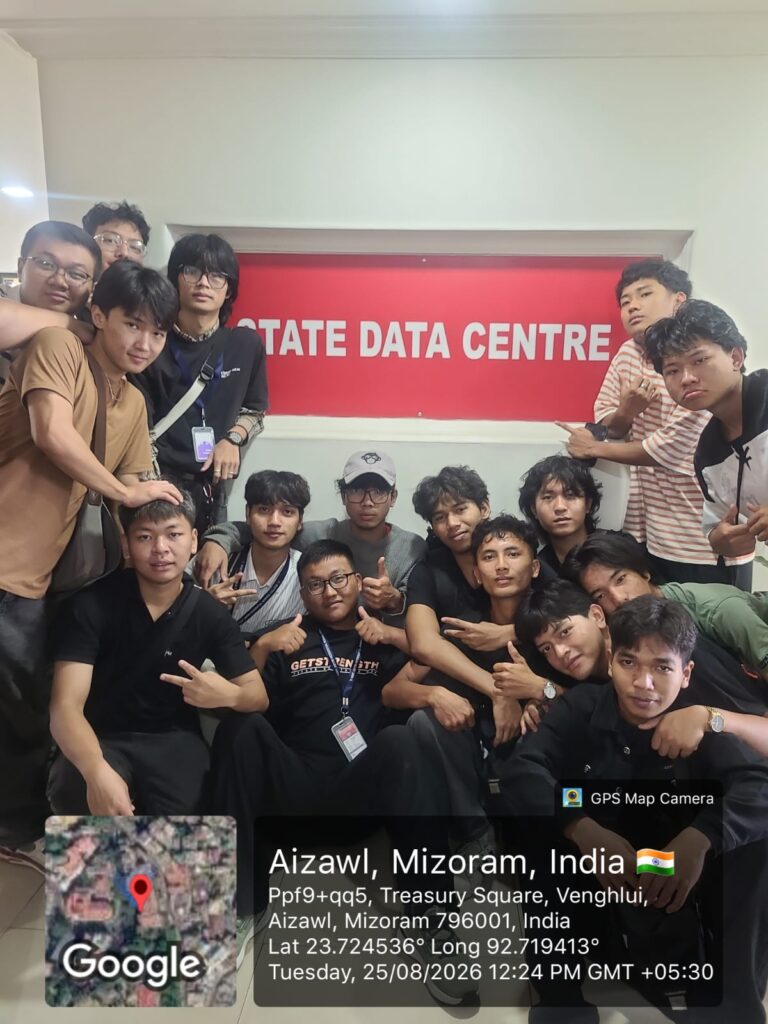
Students Present : 25 out of 33
Server Room Visit Guided By : Sir Lalrelfela
Technical Session & Q&A : Sir C.Lalhmangaiha (MSeGS)
Accompanying Faculty : Dr. MS Dawngliani, R.Lalmawipuii
Department/Semester : BCA/3rd Semester
College : Govt.Ziritir Residential Science College
1. Introduction
As part of the academic curriculum and to provide students with practical exposure to information and communication technology infrastructure, a field visit to the ICT State Data Center was organized on 25 August 2026.
The visit provided students with an opportunity to observe real-world data-center infrastructure and gain practical knowledge of servers, networking, cybersecurity, software development, deployment, cloud computing, scalability, and other areas relevant to the IT industry.
A total of 25 students out of 33 attended the field visit. The students were divided into two groups to ensure an organized visit to the technical facilities.
2. Arrival and Entry
Upon arrival at the ICT State Data Center, the students completed the required entry registration. The names of students entering the technical areas were recorded at the entrance as part of the access-control procedure.
The students were subsequently divided into two groups. The first group proceeded to the server room under the guidance of Sir Lalrelfela, followed by the second group.
The entry procedure provided students with an initial understanding of the importance of controlled access and accountability in an environment containing critical computing infrastructure.
3. Visit to the Server Room
The server room was one of the major highlights of the field visit. Students were introduced to various components and concepts associated with data-center infrastructure, including servers, CPUs, RAM, routers, switches, firewalls, bridges, and other networking equipment.
Different server racks were observed during the visit. One older rack that was no longer in active use was approximately 36U, while a newer rack currently in use was approximately 34U. Students were introduced to the concept of rack units (U), a standard measurement used to describe the vertical height of equipment racks.
The visit demonstrated that a modern data center is much more than a collection of computers. It consists of organized computing, storage, networking, security, and supporting infrastructure designed to provide reliable digital services.
Students were also informed about the role of the data center in supporting various government-related digital services. Government websites and data are hosted through such infrastructure, while different systems may serve different departments and purposes.
The discussion also introduced students to infrastructure associated with law-enforcement and cybercrime-related activities, demonstrating the importance of centralized computing infrastructure in supporting government operations and digital services.
4. Networking and Security Infrastructure
During the server-room session, students were introduced to the functions of several important networking and security components.
- Routers – responsible for directing network traffic between different networks.
- Switches – used to connect devices within a network and forward data to the appropriate destination.
- Firewalls – used to monitor and control network traffic according to defined security rules.
- Bridges – used to connect network segments and facilitate communication between them.
The practical exposure helped students develop a clearer understanding of networking concepts that are commonly introduced through theoretical and classroom-based learning.
The session also highlighted the close relationship between networking, infrastructure, and cybersecurity, particularly in environments where large amounts of important data and digital services must be protected.
5. Conference Hall and Technical Interaction
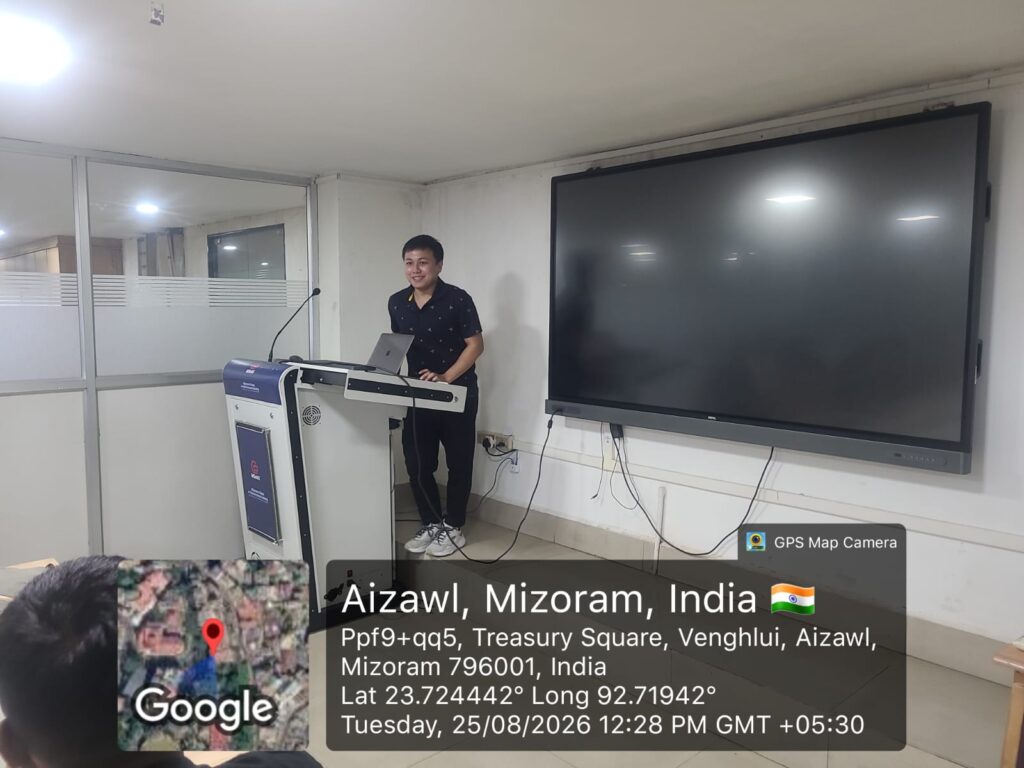
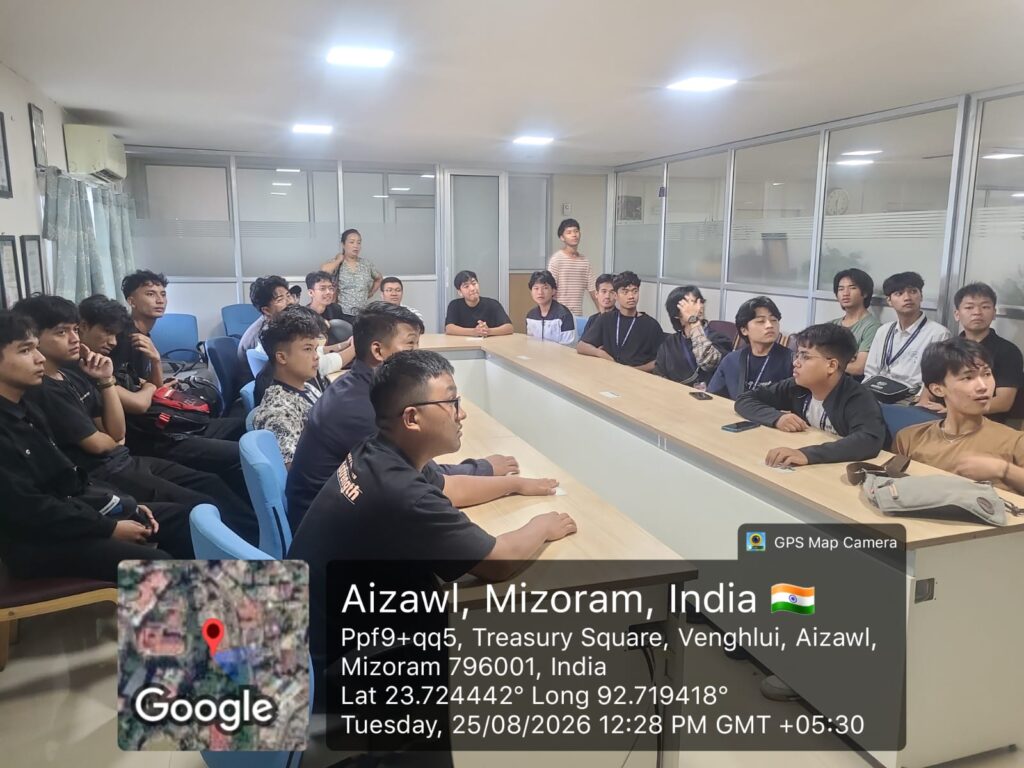
Following the server-room visit, the students were taken to the conference hall for an interactive Question-and-Answer session with Sir C.Lalhmangaiha (MSeGS).
The session covered a broad range of topics related to the IT industry and modern software engineering. Major areas of discussion included:
- Web, application, and software development
- Frontend and backend development
- Software development workflow
- Application deployment
- Cybersecurity
- Website vulnerabilities
- Artificial Intelligence in software development
- AI-assisted programming and “vibe coding”
- Continuous Integration and Continuous Deployment (CI/CD)
- Software packages and libraries
- GitHub and collaborative development
- Application scalability
- Cloud hosting and operational costs
The interaction helped students understand how the infrastructure observed in the server room is connected to the development and deployment of the software and services that operate on it.
Conclusion
The field visit to the ICT State Data Center was an informative and valuable academic experience. Sir Lalrelfela provided students with practical exposure to data-center infrastructure and helped strengthen their understanding of servers, networking, security, software development, deployment, scalability, and cloud computing.
The technical interaction with Sir Lalhmangaiha (MSeGS) further enhanced the learning experience by connecting infrastructure-level concepts with modern software-engineering practices.
The visit successfully bridged the gap between classroom theory and real-world implementation, while also increasing students’ awareness of the skills and knowledge required in the modern IT industry.
The students express their sincere gratitude to Sir Lahmangaiha (MSeGS), the accompanying faculty members, and everyone involved in organizing the field visit for providing this valuable learning opportunity.
Report By
B.Remruatpuia & F.Lalramliana
3rd Semester
Department of BCA